MoEngage push vs in-app messaging: when to use each
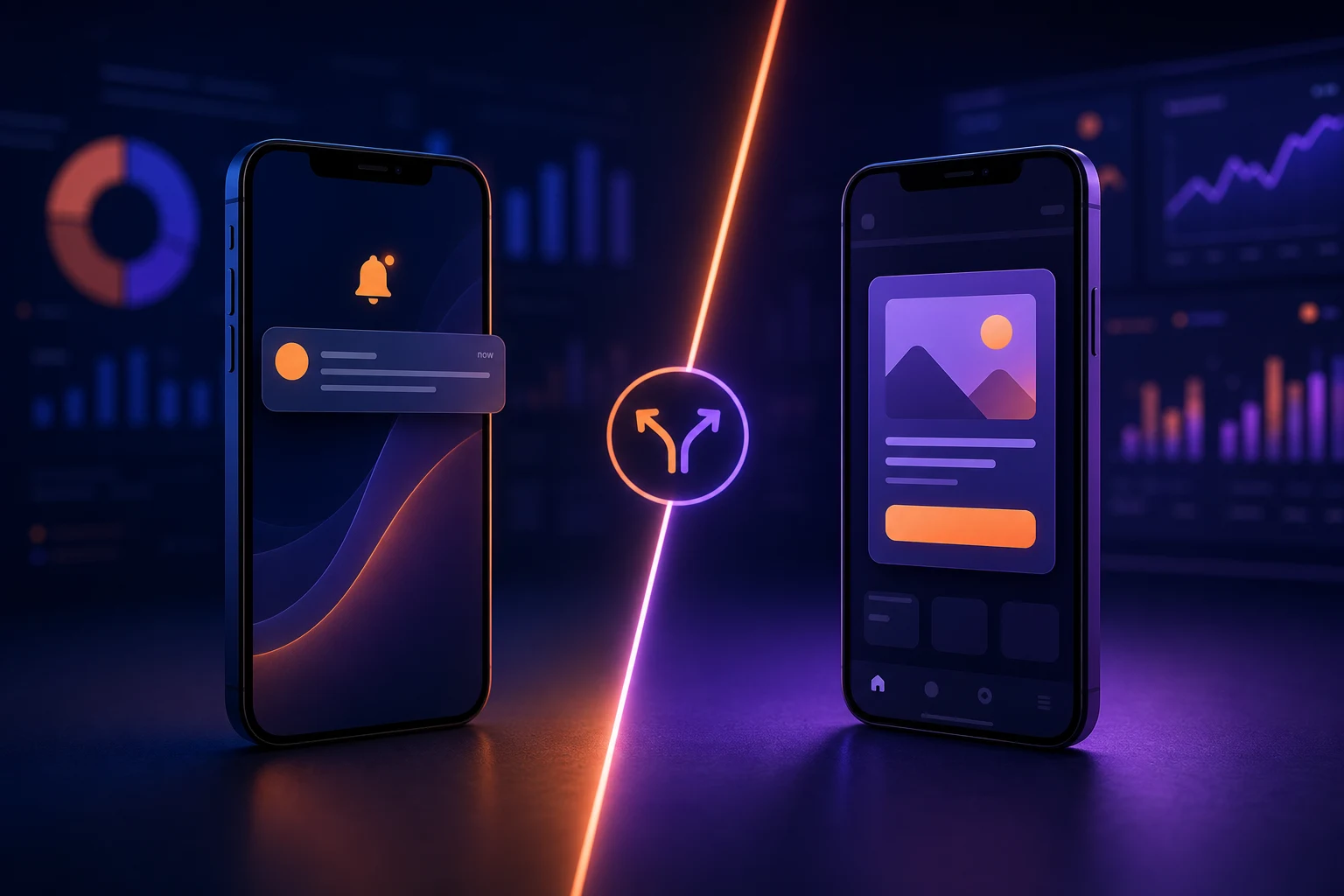
Push interrupts; in-app guides. We use a decision matrix based on urgency, session context, and permission status.
Key takeaways
- 01
Channel choice is a UX decision, not a marketing default.
- 02
Permission denied users need an in-app communication path.
- 03
Measure dismiss rate — high dismiss means wrong channel or timing.
MoEngage push versus in-app is one of the questions we hear most from product and engineering teams in 2026. The gap between a polished demo and a production system is where most projects stall.
We've shipped this across Flutter apps, SaaS backends, and analytics stacks for startups and enterprises. Here's what works, what breaks, and how we approach it on real client projects.
What matters in practice
For moengage push vs in-app messaging: when to use each, the details that look optional in a slide deck become blockers in week six of a build. We standardize patterns early so teams don't reinvent the wheel on every sprint.
- Push: time-sensitive alerts user asked for (delivery, security)
- In-app: feature discovery when user is already in relevant screen
- Fallback in-app when push permission denied — never silent fail
- Cap combined touchpoints at 3 per week per user for marketing
Common pitfalls we see
Teams often move fast on the happy path and skip instrumentation, error handling, or review gates. That works for a hackathon — not for an app with paying users and compliance requirements.
We bake in logging, fallbacks, and explicit ownership before launch. The extra day upfront saves a week of firefighting after release.
“Switching feature announcements from push to in-app doubled click-through without more sends.”
The bottom line
Treat MoEngage push versus in-app as part of your product architecture, not a side task. When it's designed in from discovery — with clear metrics and maintainable code — your team ships faster and sleeps better after launch.
About the author
Veloria Analytics
Data & Product Analytics
We implement Firebase, PostHog, MoEngage, and GA4 instrumentation — turning product events into dashboards teams actually use.
Keep reading
Related articles


Work with us
Want to discuss this topic or build something similar?
Veloria Tech ships production-grade mobile, web, and AI products — from architecture through launch and beyond.